
Home / Residential EV Charging
Charging at home turns the time your EV is already parked into useful charging time. VYON plans home EV charger solutions in Pakistan around the vehicle, electrical supply, parking position, cable reach, and the charging routine that fits naturally into daily life.
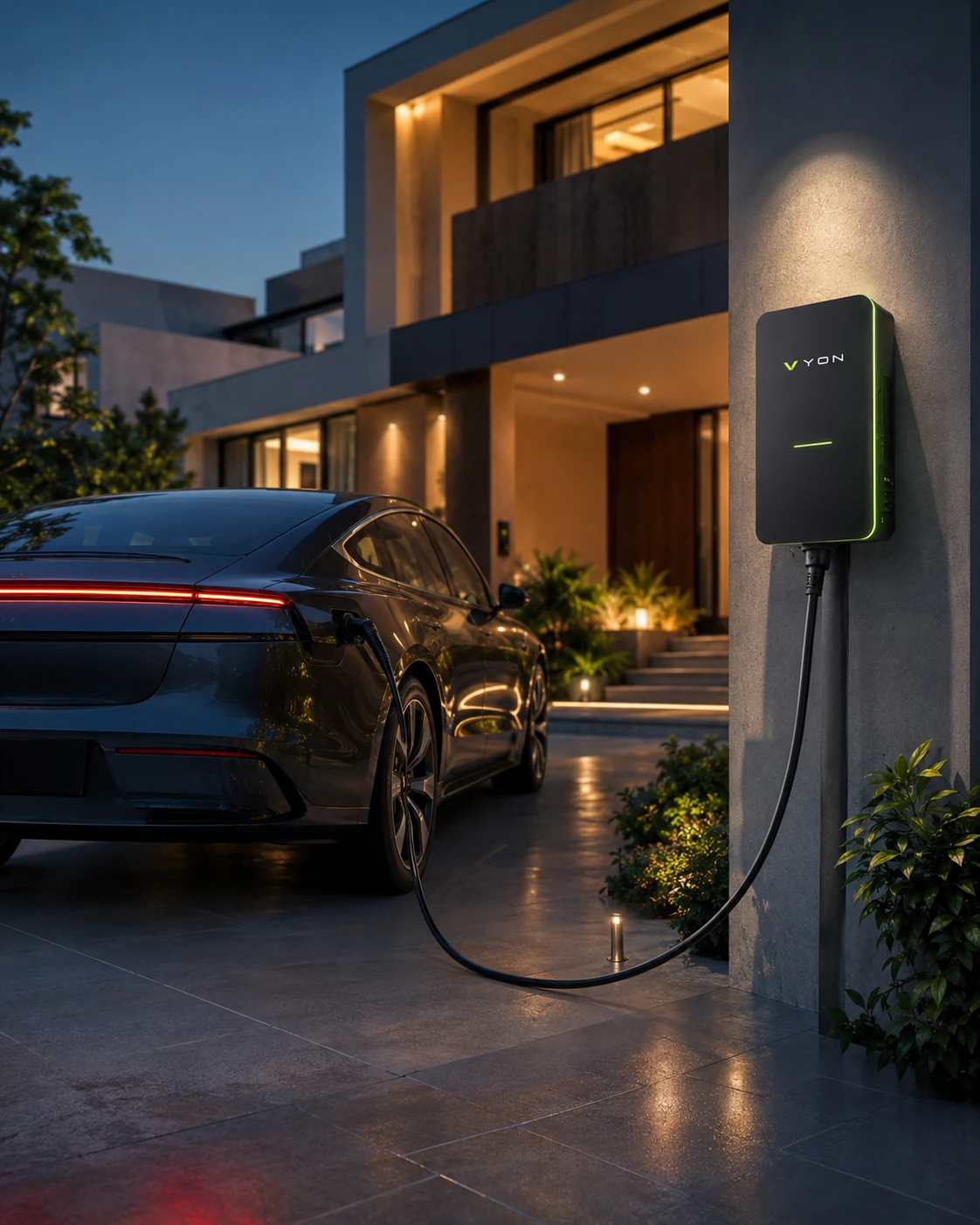
A residential charger should make everyday charging simpler, not complicate parking at home. The right setup depends on where the vehicle stays overnight, available power, cable routing, access, and how much energy the vehicle normally needs between trips.
A wall-mounted EV charger can turn a regular driveway into a dedicated charging point, with placement planned around parking position, cable reach, weather exposure, and the property's electrical setup.
Garages provide a practical environment for private EV charging because the vehicle usually returns to the same space. Charger positioning can make plugging in part of the normal parking routine.
Allocated parking in apartment buildings may require additional planning around electrical supply, cable routes, metering, shared areas, and access before a private charging point is introduced.
Homes with more than one EV or several drivers need charging planned around vehicle schedules, available electrical capacity, and whether charging demand is likely to overlap.
Planning charging infrastructure during construction or renovation can simplify cabling, electrical protection, and charger placement before finishes and parking areas are completed.
A property does not need to be designed around EVs from the beginning. Home EV charger installation can start with an assessment of the existing electrical system and parking setup.
An EV parked overnight already has time on its side, so residential charging can be matched to daily mileage, parking hours, battery needs, and the electrical capacity available at home.
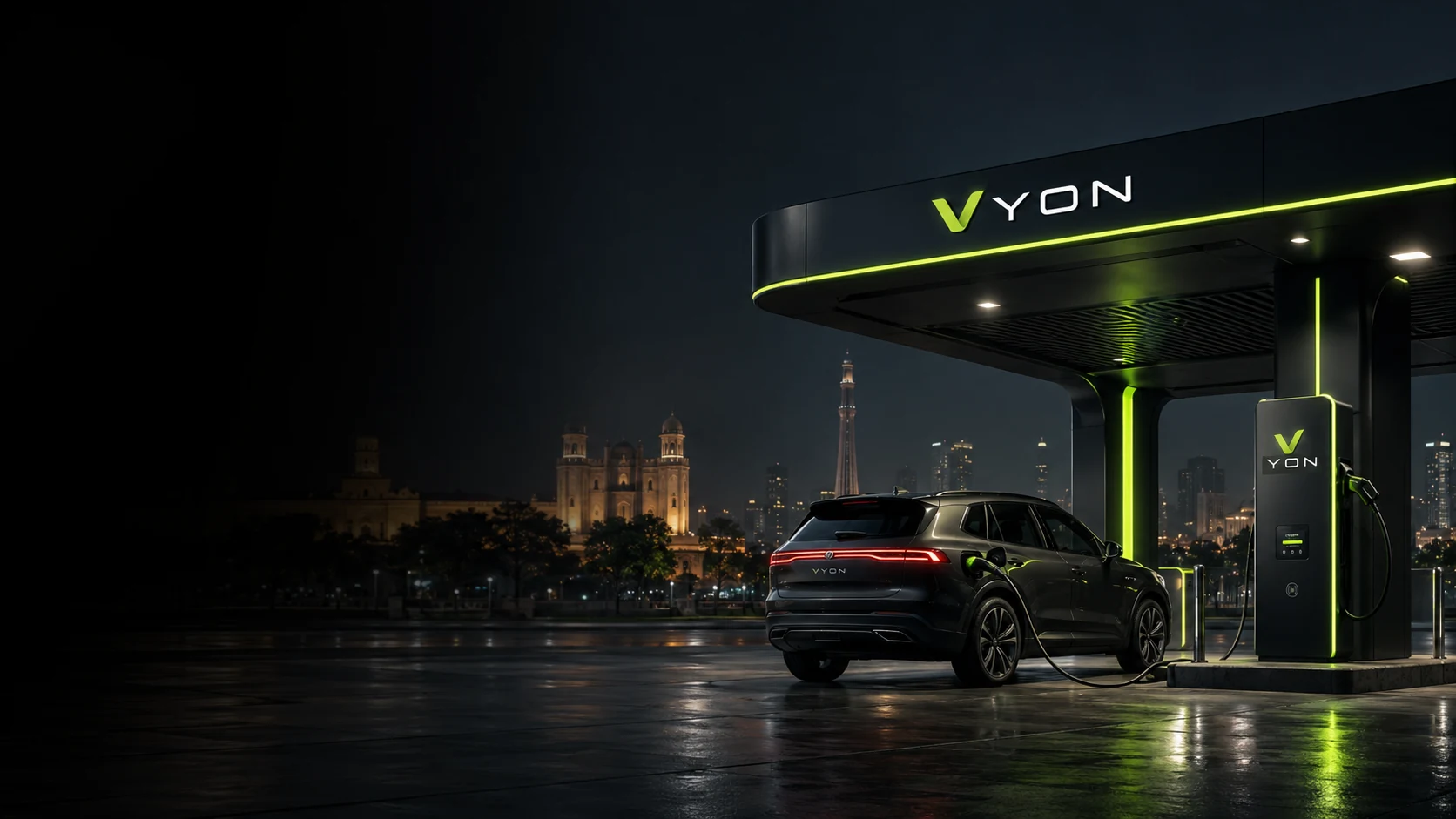
Residential charging becomes easier when the decisions are made in the right order. VYON starts with the property and vehicle, then works toward a setup that fits how the EV will actually be used.
The vehicle model, charging capability, daily driving, parking duration, and expected charging frequency help establish what the home charger needs to deliver.
The electrical supply, distribution board, parking position, mounting location, cable route, and distance to the charger are reviewed before installation planning begins.
A suitable AC charger is selected according to the vehicle, available power, desired charging rate, and any smart features required.
Cabling, mounting, electrical connections, and protective equipment are installed according to the agreed layout, with the charger positioned for convenient everyday use.
The charger is tested, configured where supported, and prepared for daily use. Drivers can also explore broader EV charging solutions if their needs extend beyond residential charging.
The right charger size depends on your vehicle’s onboard AC charging limit, daily mileage, parking duration, and available electrical capacity at the property. A higher-rated charger is not automatically better if the vehicle cannot accept that output or the home electrical system cannot support it safely.
In many cases, yes. Existing homes can be assessed for available electrical capacity, cable routing, charger location, parking access, and protection requirements. Some properties may need electrical upgrades before installation, while others can support a home charger with relatively straightforward modifications.
The better option depends on the vehicle and property. A 7.4 kW charger can suit many overnight charging routines, while 22 kW may be useful where the vehicle supports higher AC input, and the property has enough electrical capacity to deliver that power consistently.
Yes, where the vehicle, charger, or connected platform supports scheduling. This can allow charging to begin during selected hours instead of immediately after plugging in. Smart scheduling may also help coordinate household electricity use and make charging fit more naturally into your daily routine.
A home EV charger generally needs electrical protection and wiring designed for its charging load rather than relying on an ordinary household circuit. The exact setup depends on the property, charger rating, existing electrical system, and relevant EV charging safety considerations in Pakistan.

If your EV already spends hours parked at home, that time can become your regular charging window. Tell VYON about the vehicle, property, and parking arrangement, or contact VYON to discuss the next step.