
Home / Commercial EV Charging
Commercial charging has to work for more than the vehicle. VYON plans commercial EV charging in Pakistan around parking patterns, customer or employee dwell time, electrical capacity, access requirements, charger demand, and how the property operates throughout the day.
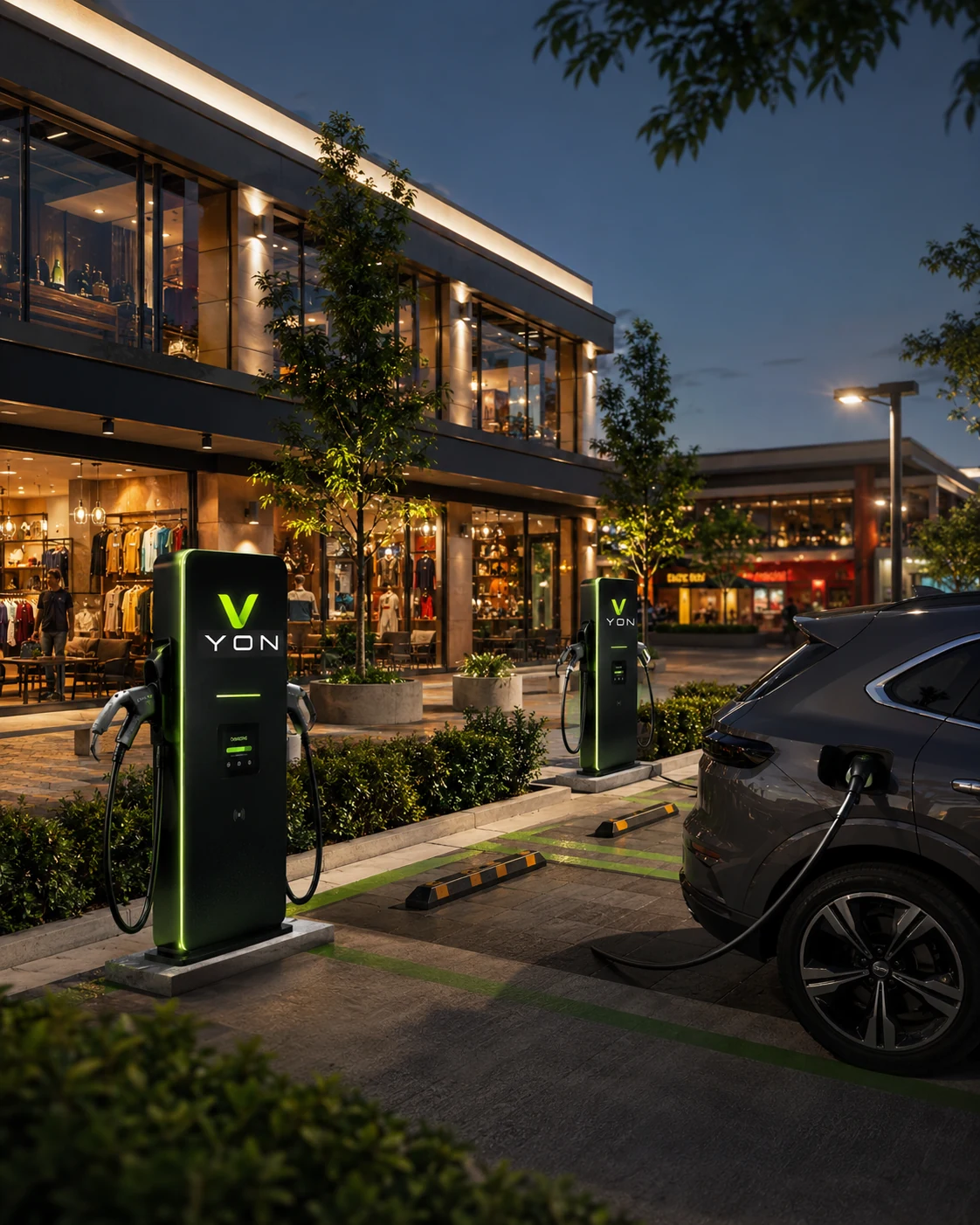
An office car park behaves differently from a hotel, shopping destination, or mixed-use development. The right commercial EV charging solution starts by understanding who will use the chargers, how long vehicles remain parked, and what the site can realistically support.
Employee and visitor charging can turn working hours into useful charging time, with charger numbers, access, and electrical demand planned around normal workplace parking patterns.
Guests may leave vehicles parked for several hours or overnight, making hospitality properties suitable for charging configurations designed around longer dwell times and convenient access.
Shopping destinations can introduce EV charging for customers already spending time on site, with charger selection influenced by visit length, parking turnover, and expected demand.
Residential, office, hospitality, and retail users may share the same property while requiring different charging access, operating periods, and infrastructure capacity.
Dedicated parking facilities can integrate business EV charging stations around bay availability, driver access, charging duration, and the electrical capacity serving the property.
Developers can plan Commercial EV charger installation alongside electrical and parking infrastructure instead of treating charging as a later retrofit.
Commercial sites do not always benefit from choosing the highest available charging output. Workplace users may park for hours, while retail or destination visitors may stay much less time, so AC and DC charging should be matched to dwell time, vehicle turnover, available power, and expected demand.
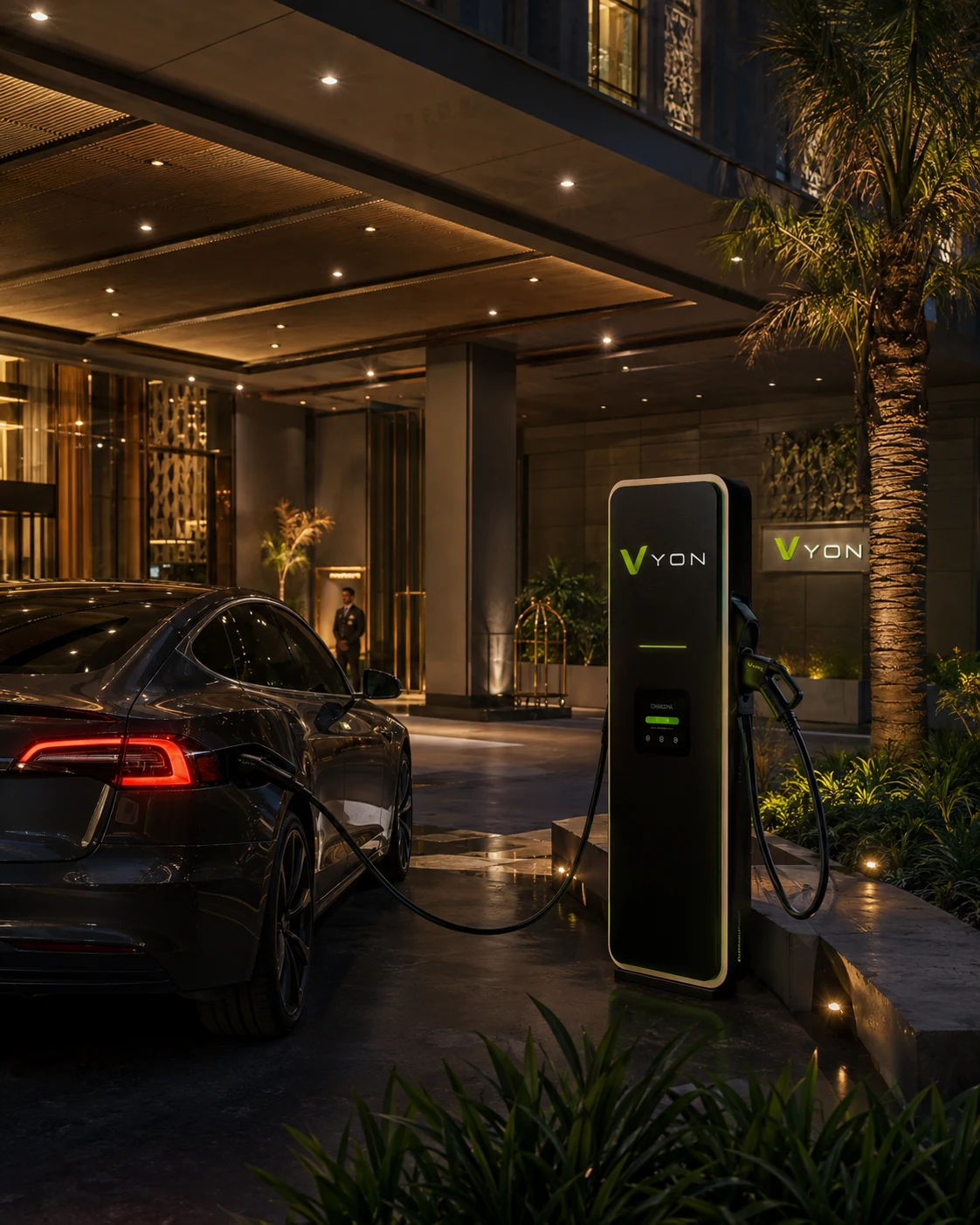
Commercial charging infrastructure connects vehicle behavior with building power, parking operations, and future demand. VYON develops the project around how the site functions before deciding what charger configuration should be deployed.
Expected users, vehicle turnover, parking duration, operating hours, and the purpose of charging are mapped before charger quantities or output levels are selected.
Existing electrical demand and available capacity are considered alongside the new charging load. Where several chargers are planned, load management can become an important part of the infrastructure strategy.
AC and DC chargers can be considered according to dwell time and site requirements, while access planning determines who can use the charging points and under what conditions.
Electrical works, charger positioning, cable routes, protection, civil requirements, testing, and commissioning form the deployment stage. VYON can coordinate Commercial EV charger installation around the agreed site plan.
Connected monitoring, energy management, usage visibility, and future charger expansion can be considered from the beginning. Businesses with operational vehicle requirements can also explore Fleet EV charging solutions separately.
The number should be based on expected EV users, parking duration, turnover, electrical capacity, and how quickly vehicles need to recharge. Installing chargers for every parking bay may not be necessary initially, especially when infrastructure can be planned to accommodate additional charging points as demand grows.
It depends on how long vehicles normally remain at the property. Offices and hotels may suit AC charging because vehicles often stay for hours, while locations with shorter visits may justify DC charging. Some commercial sites can benefit from a combination of both charging types.
Charging adds a new electrical load, so existing building demand and available capacity need to be assessed before multiple chargers are installed. Load management may help coordinate power across charging points, but the appropriate solution depends on the site’s electrical infrastructure and expected simultaneous charging demand.
Access requirements can be considered during system planning. A workplace may need charging reserved for employees, while a hotel or retail property may want visitor access. The available controls depend on the selected equipment, software environment, and how the business intends to operate its charging facilities.
Potentially, depending on the property, parking access, electrical capacity, location, and expected driver activity. Businesses interested in opening charging to a broader audience can explore how to host a VYON charger and determine whether the site is suitable for a partnership or public-facing deployment.

Whether the site is an office, hotel, retail destination, commercial car park, or future development, a useful starting point is understanding how vehicles and people use the location. Request an EV charging consultation to review the site, electrical capacity, and charging requirements.