
Home / Fleet EV Charging
Fleet charging works best when infrastructure follows the vehicles’ working day. VYON develops fleet EV charging solutions in Pakistan around route schedules, depot power, vehicle dwell time, charging windows, simultaneous demand, and the energy each vehicle needs before returning to service.
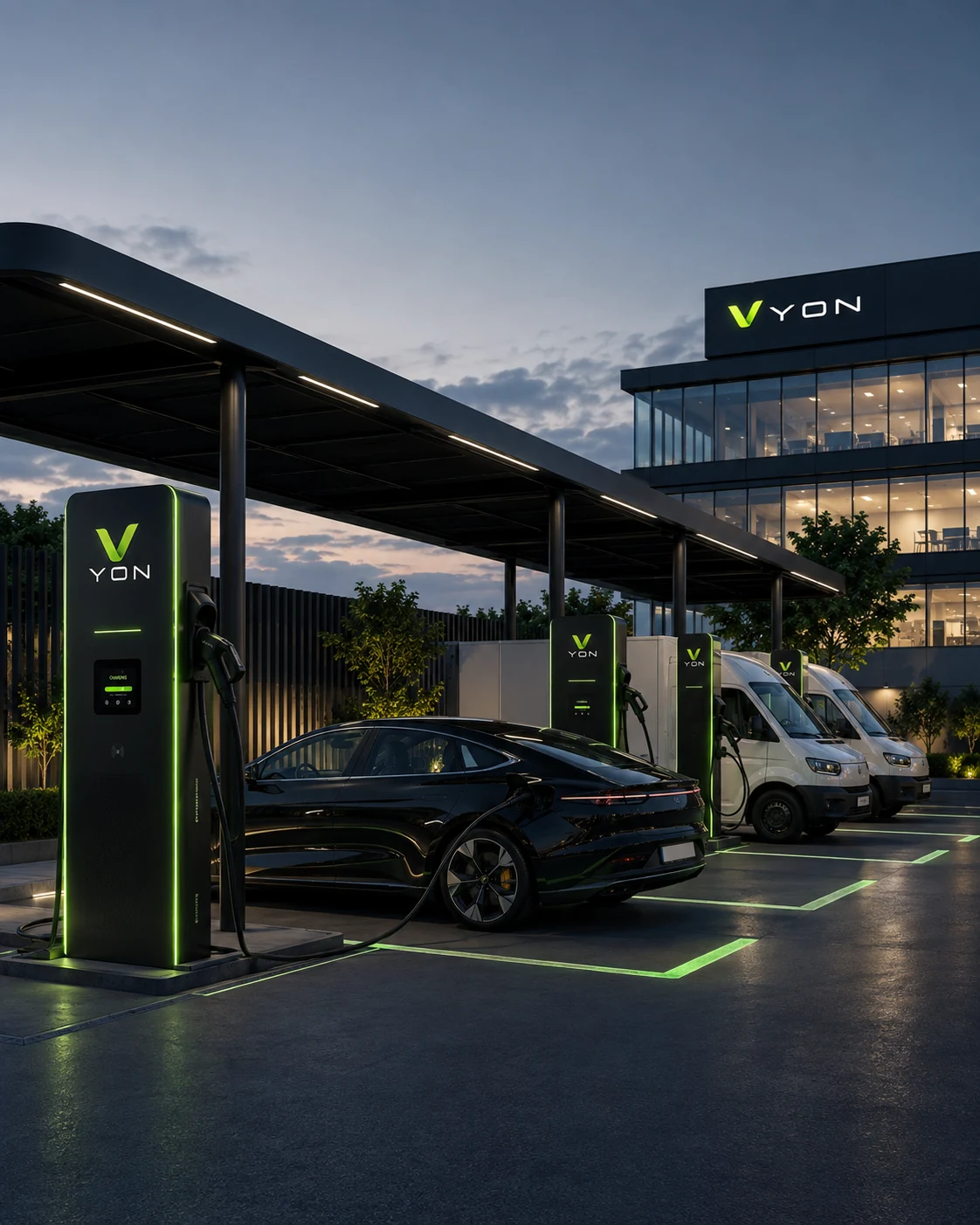
A delivery van returning every evening has different charging requirements from a company car parked throughout the workday. Fleet infrastructure starts with when vehicles arrive, how long they remain available for charging, and when they need to leave again.
Depot charging can be coordinated around route completion, overnight parking, vehicle energy requirements, and the number of vans or trucks returning within similar time windows.
Frequent routes and predictable return periods create opportunities to schedule charging around dispatch times while reducing unnecessary competition for available depot power.
Company cars used for meetings, field visits, and employee travel can charge during longer parking periods at offices, headquarters, or designated fleet parking areas.
Maintenance, engineering, and field-service vehicles often need dependable overnight or between-shift charging so vehicles are ready when the next work period begins.
Larger vehicle bases may require several charging points, coordinated power delivery, phased electrification, and infrastructure designed around simultaneous vehicle arrivals.
Businesses operating fleet vehicles alongside employee or visitor charging can connect fleet planning with broader Commercial EV charging requirements at the same site.
The fastest charger is not always the most useful fleet solution. A vehicle parked for eight hours overnight may need a different strategy from one returning briefly between routes, so charging power should be matched to dwell time, required energy, departure schedules, and available depot capacity.

Fleet electrification connects energy planning directly with vehicle availability. VYON maps charging requirements against routes, depot conditions, and operating schedules before determining how chargers should be deployed and managed.
Vehicle types, route distances, return times, parking periods, daily energy use, and required departure states are reviewed to understand how much charging capacity the operation actually needs.
Existing electrical demand and available capacity are evaluated against expected simultaneous charging. The assessment helps determine charger quantities, output levels, and where load balancing may be useful.
Vehicles can be grouped according to when they return and when they leave. Charging schedules are then planned around those windows rather than assuming every vehicle must charge at full power immediately.
Cabling, protection, charger positioning, distribution requirements, civil works, testing, and setup form the deployment stage. Fleet EV charger installation is planned around vehicle movement and depot operations rather than interrupting them unnecessarily.
Connected systems can provide visibility into charging activity, energy use, and charger status. Infrastructure can also be planned in phases, so additional vehicles or chargers can be introduced as fleet electrification progresses.
The required number depends on fleet size, route schedules, daily energy consumption, vehicle dwell time, charger output, and how many vehicles need power simultaneously. A fleet does not necessarily need one charger per vehicle if charging windows and available infrastructure can be coordinated effectively.
The answer depends mainly on operational timing. Vehicles parked overnight may have enough time for AC charging, while tighter turnaround periods can make DC charging more appropriate. Some depots may benefit from a mixed approach that assigns different charging speeds to different vehicle duties.
Load balancing manages how available electrical power is distributed across multiple vehicles charging at the same time. Instead of allowing every charger to demand maximum output simultaneously, the system can coordinate charging demand according to available capacity, priorities, schedules, and operational requirements.
Yes, where the selected vehicles, chargers, and management systems support scheduling. Charging can be planned around when vehicles return to the depot, how much energy each one requires, and when it needs to leave again, helping infrastructure follow fleet operations more closely.
Start with vehicle routes, parking duration, expected energy use, available electrical capacity, charger locations, and future fleet growth. Electrical protection and operational requirements also matter. Projects should account for relevant EV charging regulations and safety considerations before deploying and commissioning infrastructure.

Whether the fleet operates from Lahore, Karachi, Islamabad, or another VYON service city, the charging plan should begin with how vehicles work. Share your depot layout, fleet size, routes, and operating schedule, or contact VYON to discuss the charging requirements.