
From residential parking to industrial facilities, commercial properties, and operational fleets, VYON develops EV charging solutions in Faisalabad around vehicle activity, available electrical capacity, parking time, and the demands each site places on its charging infrastructure.
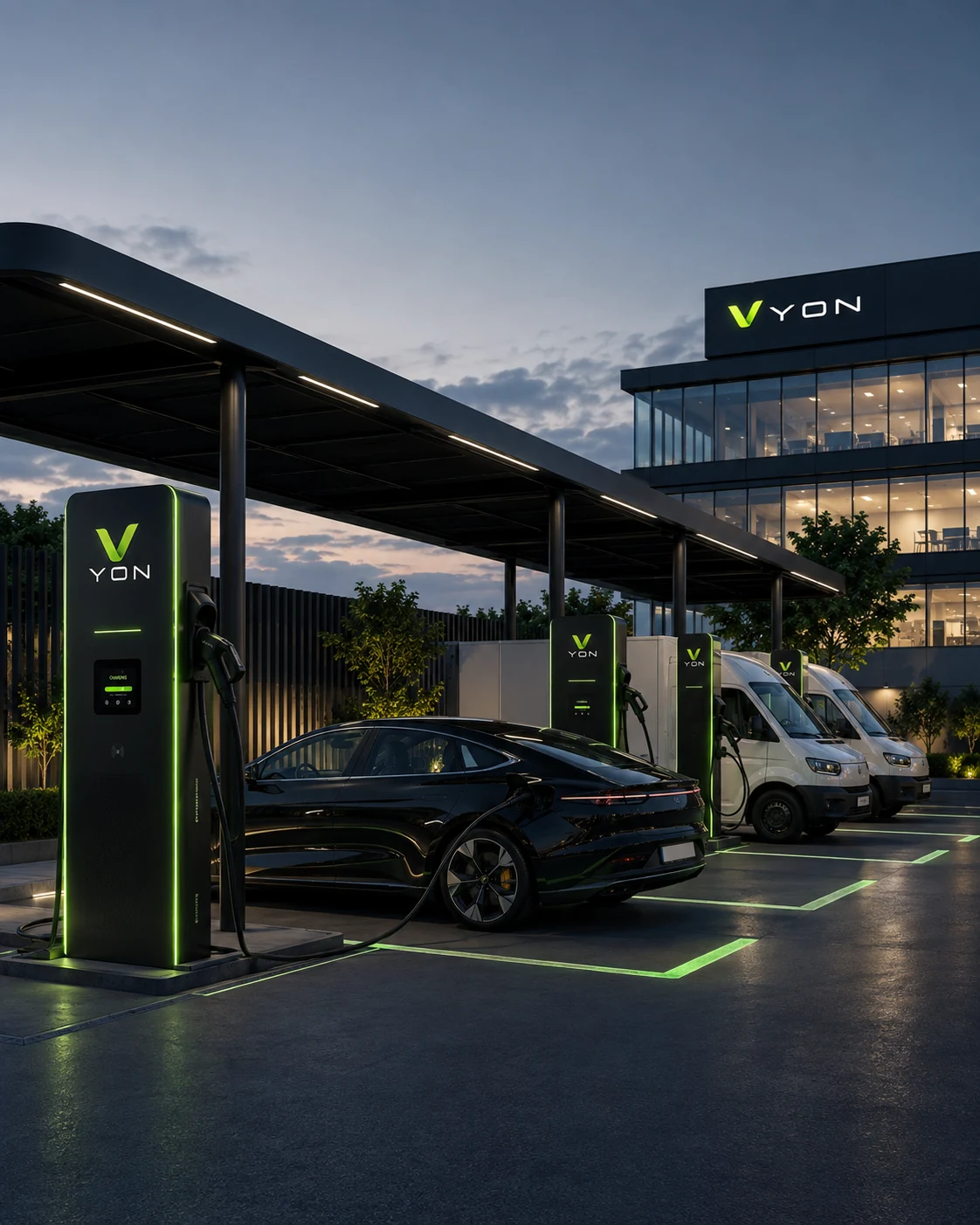
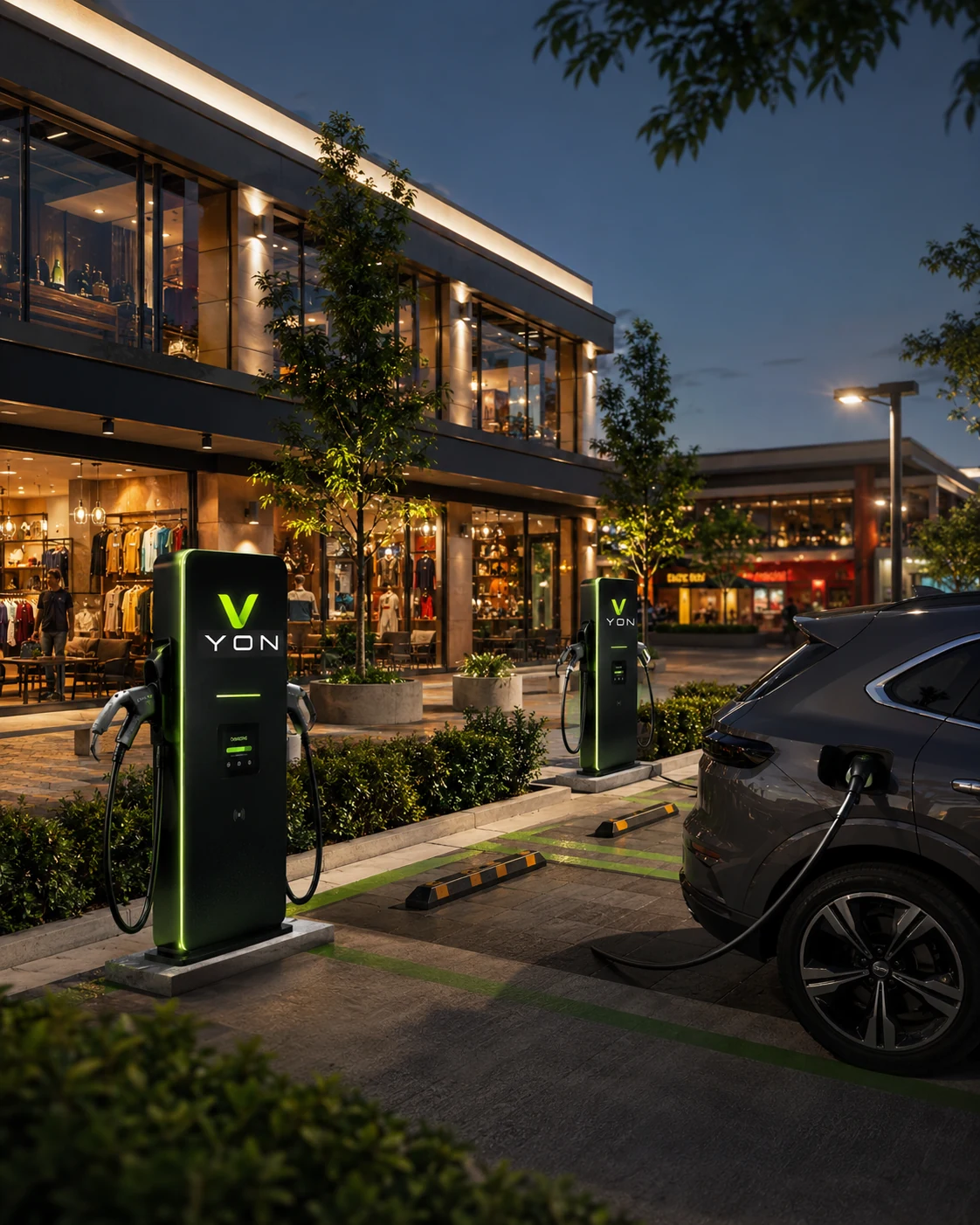
Faisalabad’s residential and business charging needs can sit at opposite ends of the spectrum. A private vehicle parked overnight may need one accessible AC charger, while an industrial property, office, warehouse, hotel, or commercial destination may be considering several charging points for staff, customers, or operational vehicles.
For business environments, VYON can plan Commercial EV charging solutions around parking duration, expected users, electrical demand, and future charger growth. Industrial and logistics operations can take a different route through Fleet EV charging solutions, while sites ready for physical deployment can move into EV charger installation once the electrical and parking requirements are defined.
A working vehicle has a deadline. Delivery vans, service vehicles, company cars, or other fleet EVs may need to leave again at specific times, which means charging has to fit between routes rather than interrupt them. Charger quantity and output therefore make more sense when they are planned alongside vehicle schedules and depot power.
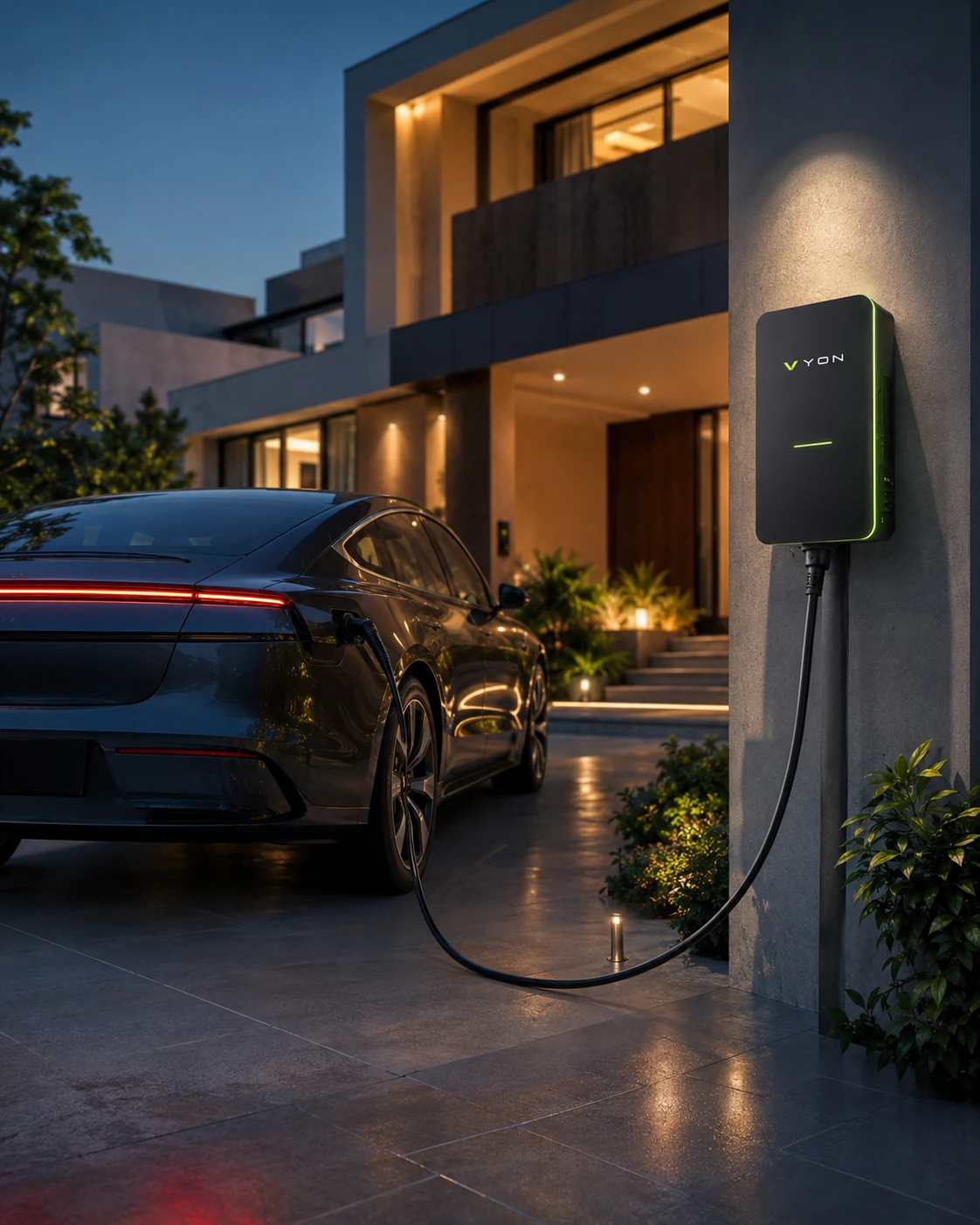
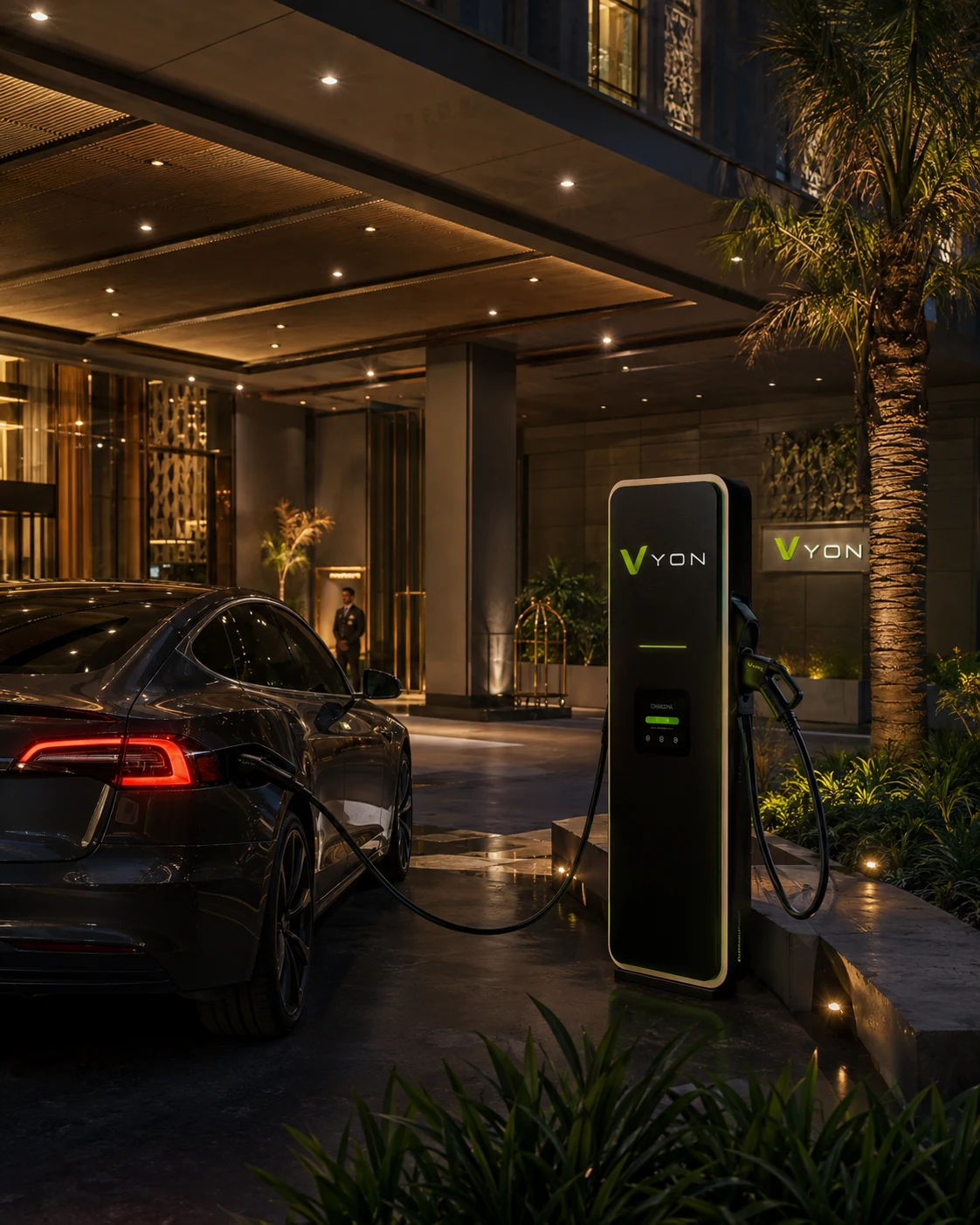
Larger business properties also need to think about what happens when several vehicles connect at once. Load management, monitoring, charger status, and energy visibility can become increasingly useful as demand grows. Compatible EV charging technology can help bring those functions into the wider charging setup instead of treating every charger as an isolated device.
A Faisalabad charging project should reflect how vehicles and electricity already move through the site. VYON reviews the practical conditions before deciding how much infrastructure belongs there.
EV charging in Faisalabad can serve private drivers, commercial properties, industrial facilities, and fleets with very different operating patterns. The right setup depends on vehicle numbers, parking duration, electrical capacity, charging windows, and how quickly demand is expected to increase.
Yes, provided the site is evaluated for available electrical capacity, parking layout, charger locations, and expected simultaneous demand. Industrial properties may also need to consider operating loads already placed on the electrical system so new EV charging infrastructure does not compete unnecessarily with other equipment.
Fleet charging should follow vehicle schedules rather than using one standard configuration for every EV. Return times, route distances, overnight parking, required departure charge, and depot power all influence whether AC charging, faster DC charging, or a combination of both makes operational sense.
Yes. A phased approach can be practical when current EV numbers are still limited. The important part is planning distribution capacity, cable routes, parking positions, and possible future charger locations early so expanding the system later does not require rebuilding infrastructure that could have been prepared beforehand.
It can be particularly useful where several vehicles may charge during overlapping periods. Smart charging systems can help monitor usage, coordinate available electrical power, and provide better visibility into charging activity. The available functions depend on the chargers, software, and electrical configuration selected for the property.
Start with the existing electrical supply, connected building load, parking arrangement, cable distance, intended charger output, and the vehicles expected to use it. These details help determine whether the existing infrastructure can support charging directly or whether additional electrical or civil work should be included.
Planning EV charging for a home, commercial property, industrial site, or fleet in Faisalabad? Share the basic site details with VYON, or contact VYON to discuss the charging requirement.