
Karachi’s mix of private residences, corporate offices, retail destinations, logistics operations, and high-traffic commercial properties creates very different charging demands. VYON plans EV charging solutions in Karachi around vehicle use, parking patterns, electrical capacity, and the way each site operates.
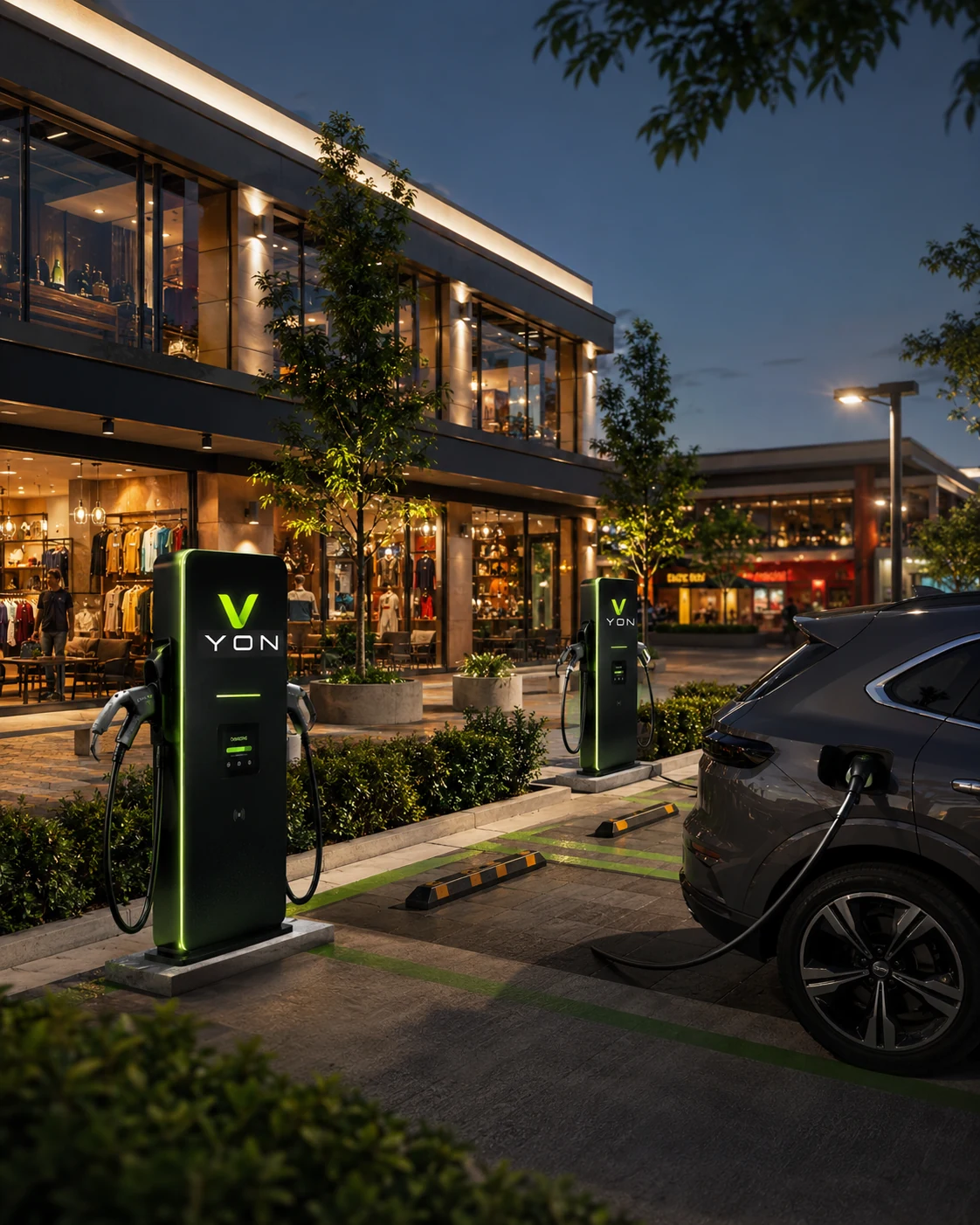
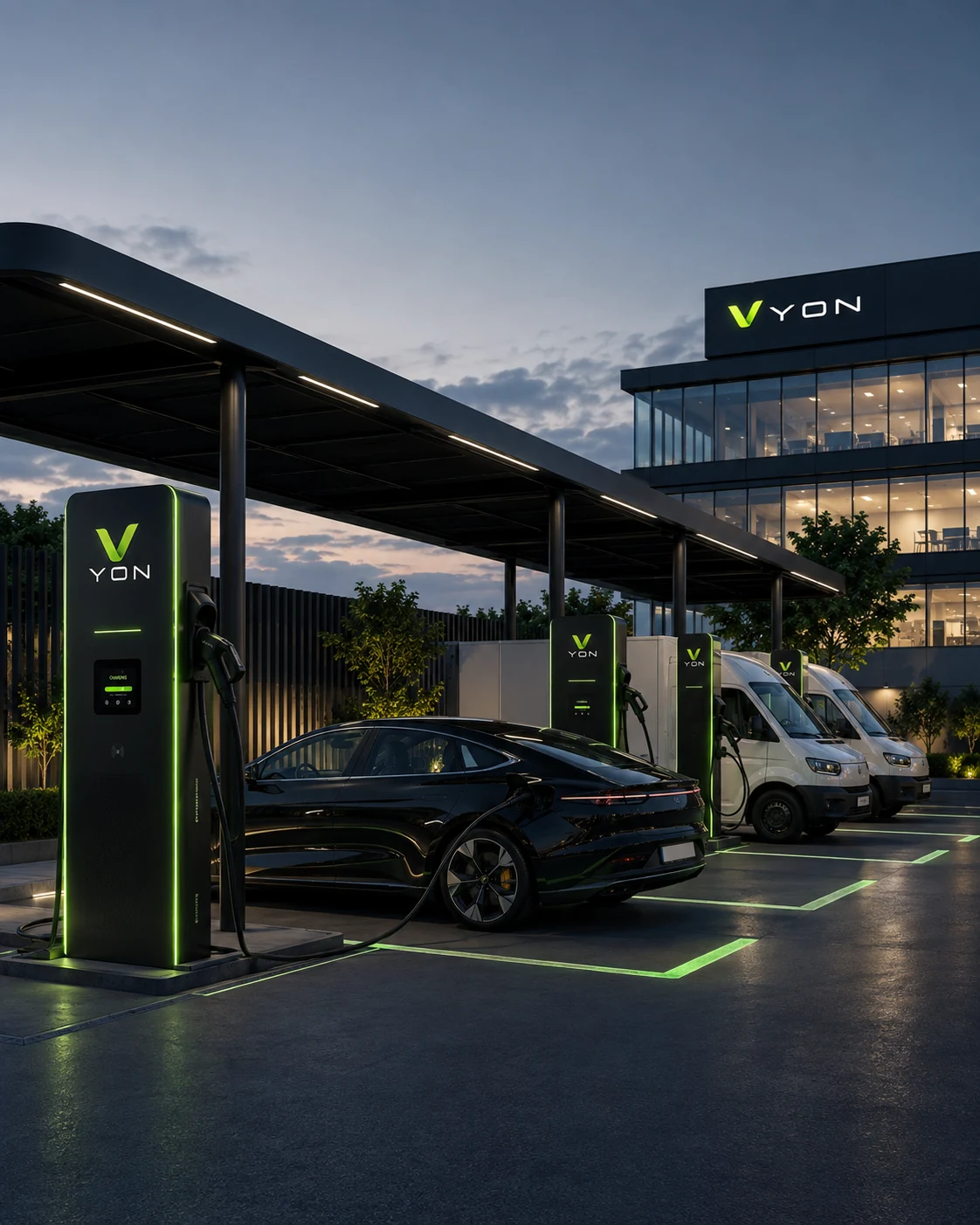
A private EV parked overnight in DHA or Clifton may only need a conveniently positioned AC charger. A corporate property around Shahrah-e-Faisal, a hotel, retail destination, or larger commercial car park can face a different challenge involving multiple users, longer operating hours, shared electrical capacity, and changing vehicle turnover.
That variety shapes how VYON approaches the city. Businesses can explore Commercial EV charging solutions around customer and employee parking, while logistics and operational sites can use Fleet EV charging solutions built around return schedules and depot demand. Projects ready for deployment can move into professional EV charger installation after the site requirements are established.
Charging demand rarely stays fixed at a busy property. A commercial site may begin with a small number of regular EV users, while a fleet depot can see several vehicles return within the same operating window. Electrical capacity, charger quantity, access, and future expansion therefore need to be considered together rather than one decision at a time.
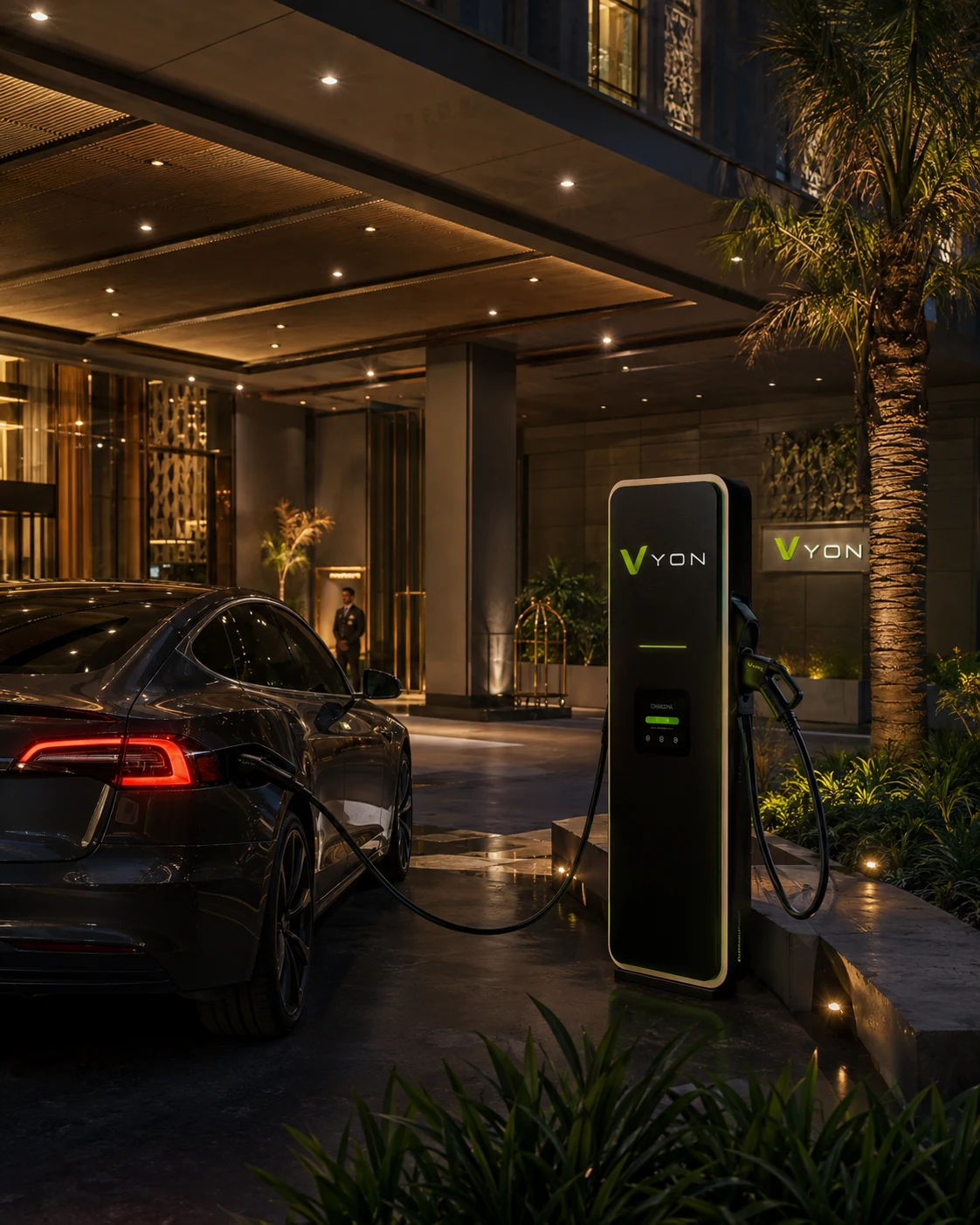
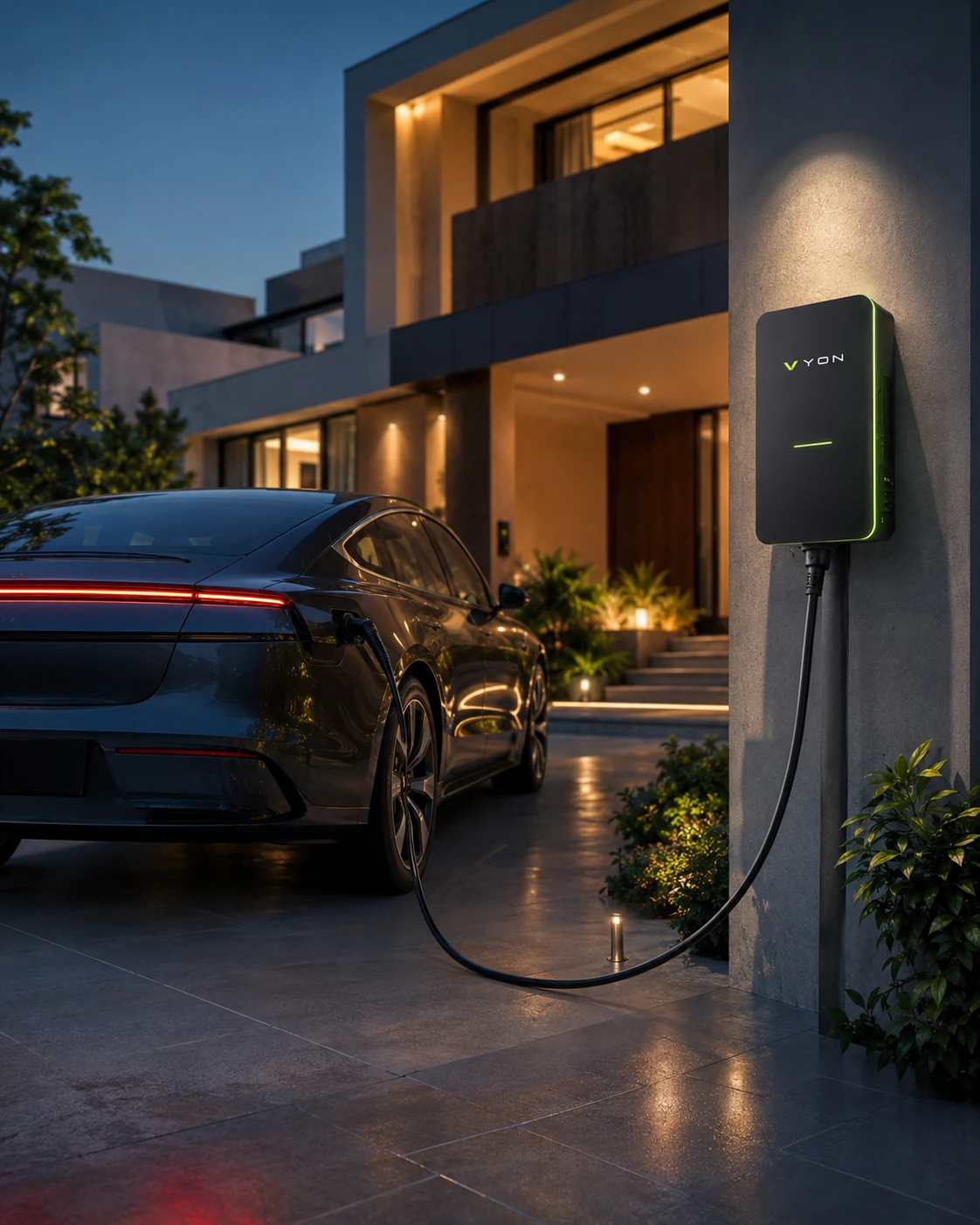
Public-facing locations bring another layer. Parking turnover, visibility, driver access, charging duration, and site power all influence whether Public EV charging infrastructure makes sense and what charger mix belongs there. Planning around actual traffic and dwell behavior gives the site more flexibility than simply installing the fastest charger available.
A Karachi EV charging project works better when the existing property sets the starting point. VYON reviews the practical conditions that affect charger performance, accessibility, and future infrastructure growth.
Karachi properties can range from private residences and office parking to larger fleet depots and public destinations. Charger type, electrical demand, parking behavior, user access, and expected growth all influence what a practical charging setup should look like.
The right home charger depends on the vehicle’s AC charging limit, daily driving distance, overnight parking time, available electrical capacity, and where the vehicle is normally parked. Many private users may find AC charging suitable, but charger output should still be matched to the car and property rather than chosen by rating alone.
Yes. Offices, hotels, retail destinations, mixed-use properties, and other commercial sites can plan charging for different user groups. The design should consider parking duration, expected demand, available electrical capacity, access control, charger quantity, and whether several vehicles are likely to charge at the same time.
Fleet charging begins with route patterns and depot timing. Vehicle return times, dwell periods, daily energy requirements, departure schedules, and available site power help determine charger quantity and output. This can reduce the need to treat every vehicle as if it must charge immediately at maximum power.
Often, yes. Existing sites can be assessed for spare electrical capacity, practical charger positions, cable routes, parking access, and protection requirements. Some properties may need upgrades or civil work, while others may support an initial charging setup with relatively limited changes to the existing infrastructure.
A public charging site should be reviewed for vehicle access, parking turnover, expected dwell time, electrical capacity, visibility, charger placement, and likely demand. The location also needs enough operating space for drivers to enter, charge, and leave without disrupting normal movement around the property.
Considering residential, commercial, fleet, or public charging in Karachi? Share the property type, vehicle demand, and parking setup with VYON, or contact VYON to discuss what the site may require.