
Home / Technology & Smart Energy
Hardware gets the vehicle connected. The technology behind it determines how chargers communicate, share available power, report activity, and adapt as demand grows. VYON brings connected systems, monitoring, load management, and energy integration into EV charging technology in Pakistan.

Charging power should follow how long vehicles remain parked, how much energy they need, and what the electrical supply can deliver. VYON considers those factors before matching hardware to residential, commercial, fleet, or public environments.
Charger Type | Typical Power | Where It Fits |
AC Single-Phase | 7.4 kW | Homes and private residential parking |
AC Three-Phase | 11–22 kW | Offices, hotels, shared parking and longer-stay fleet sites |
DC Fast | 30–60 kW | Retail destinations, restaurants and urban charging locations |
DC High-Power | 120 kW and above | Highway locations, high-traffic public sites and fleet hubs |
The same technology layer can support broader EV charging solutions, from Commercial charging infrastructure to larger Public charging infrastructure where connected operation becomes increasingly important.
A networked charger can do more than transfer electricity. Open connectivity and charging-management technology can give operators visibility into sessions, charger status, users, and available electrical capacity without tying the entire site to one isolated piece of hardware.
OCPP 1.6J and 2.0.1 provide an open communication framework between compatible chargers and charging-management platforms, supporting greater interoperability across connected infrastructure.
Charger status, charging sessions, alerts, and operating information can be viewed remotely where the selected hardware and management platform support those functions.
Connected EV chargers can support different access arrangements, including open charging, authorized users, RFID-based access, or app-based interaction depending on the system configuration.
Multiple chargers can share available electrical capacity instead of demanding their maximum output simultaneously. This becomes particularly useful for Fleet charging solutions and multi-charger commercial sites.
Charging data can provide visibility into energy consumption, charger use, and individual sessions, giving operators a clearer picture of how the infrastructure is performing.
Compatible connected equipment may support software or configuration updates without requiring a physical visit for every change, helping charging systems evolve as supported features develop.
EV charging can become part of a wider energy system rather than operating as a separate electrical load. Load balancing, solar integration, battery storage, and energy-management technology can all influence when and how vehicles receive power.
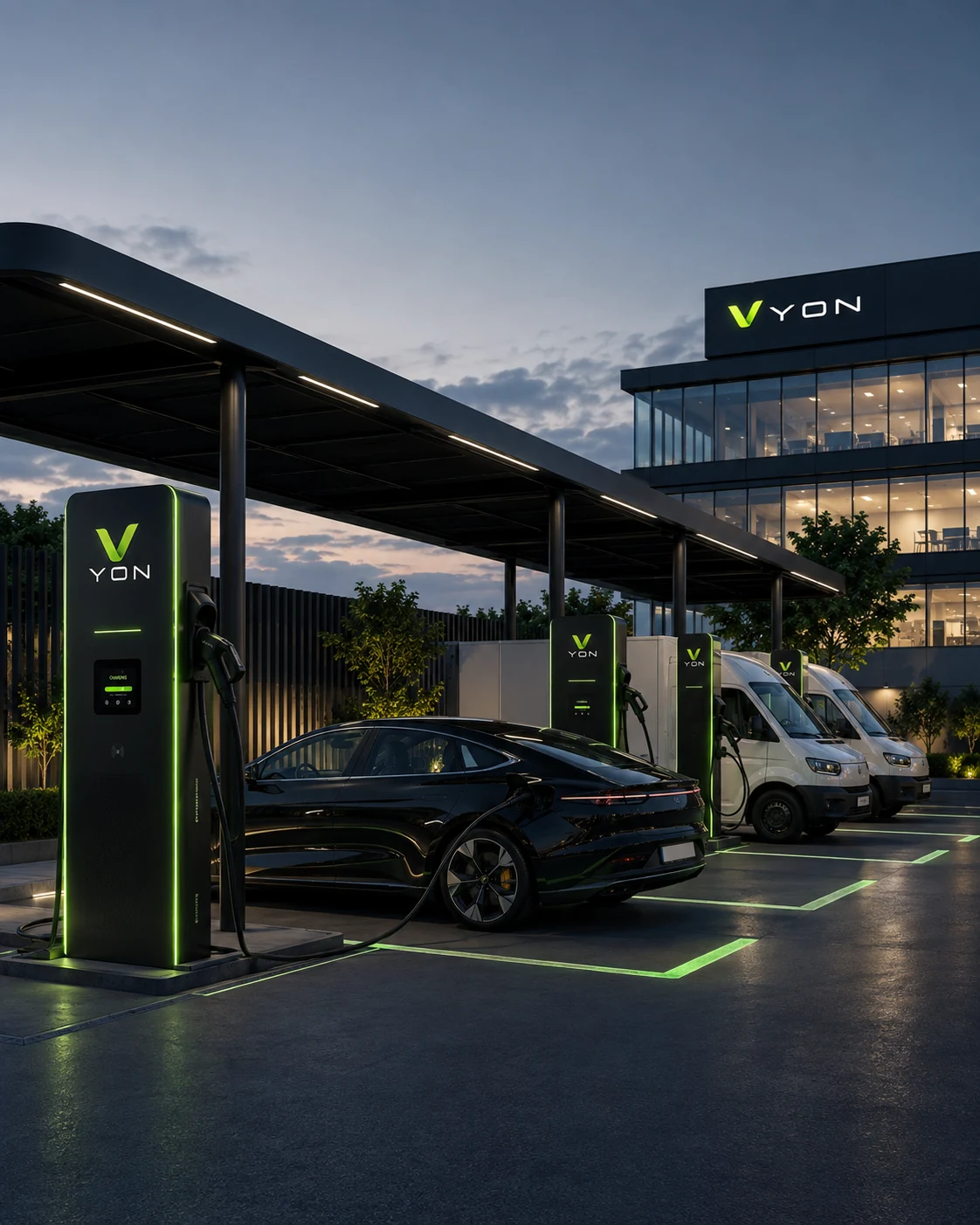
VYON can consider smart EV charging technology alongside the property’s wider electrical environment, including supported solar-integrated EV charging and battery storage EV charging configurations where the selected equipment and site design allow them.
EV ownership and charging demand can change considerably after the first installation. The most practical time to prepare for more chargers, additional cabling, greater electrical demand, and new connected features is while the original infrastructure is still being planned.
Instead of treating every future charger as a new project, VYON can consider physical and electrical expansion requirements during the initial infrastructure design.

Tell VYON what vehicles, property, and charging environment you are planning for. Our team can discuss hardware, connectivity, monitoring, load management, and energy integration based on what the site actually needs.